
The Day the Future Arrived: Inside Vaibhav Sooryavanshi’s Historic 29-Ball 97
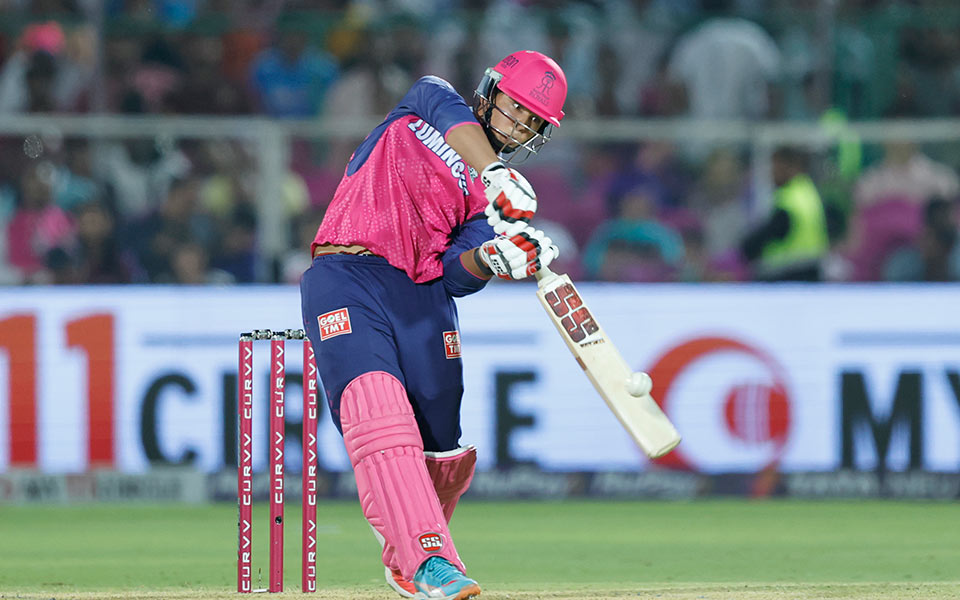
On the evening of Wednesday, May 27, 2026, the Maharaja Yadavindra Singh International Cricket Stadium in Mullanpur served as the background for an athletic phenomenon that will be discussed for generations. Vaibhav Sooryavanshi, the opening prodigy representing the Rajasthan Royals, did not merely compile an innings against a world-class bowling attack; he utterly rewrote the threshold of structural possibility in high-stakes knockout cricket. Emerging from the state of Bihar with little more than raw, unadulterated talent and an impossibly fast bat swing, the young left-hander produced a breathtaking, agonizingly historic assault, blasting 97 runs off just 29 deliveries.
Consider the gravity of that metric for a moment. He came within a solitary boundary—a simple hit away—of shattering Chris Gayle’s legendary, thirteen-year-old record for the absolute fastest century in IPL history (achieved off 30 deliveries against the Pune Warriors India back in 2013). While he ultimately fell a heartbreaking three runs short of that triple-digit milestone, walking off the playing square with visible tears streaming down his face, he left the arena having dismantled records that many assumed would survive well into the mid-21st century. This was not just a great performance; it was the day the future of cricket arrived ahead of schedule.

1. The Anatomy of Chaos: Analyzing the Inning's Progression
When the Sunrisers Hyderabad captain, Pat Cummins, won the pre-match coin toss and elected to bowl first on a Mullanpur surface that retained an atypical green tint, his decision-making process was backed by decades of analytical data. The early evening atmospheric humidity in northern India, combined with a fresh pitch, was supposed to give international fast bowlers enough lateral movement and seam deviation to restrict the opposition openers. Cummins, an elder statesman of international cricket and a multi-format World Cup-winning leader, expected a tactical chess match. Instead, he encountered a teenage buzzsaw.
Sooryavanshi did not display even a token interest in the traditional cricketing norm of "getting one's eye in." He signaled his complete disregard for tactical preservation from the very first over of the match. Standing deep within his batting crease, he intercepted a back-of-a-length delivery from Cummins and, with minimal physical strain, lifted it cleanly over the straight sightscreen for a monstrous six. It was a declaration of total sporting intent. What followed over the subsequent six overs was a systematic, calculated destruction of a modern bowling unit.
============================================================
VAIBHAV SOORYAVANSHI: THE ELIMINATOR SCORECARD (MAY 27, 2026)
============================================================
Runs Scored      : 97
Balls Faced      : 29
Strike Rate      : 334.48
Boundaries (4s)  : 5
Maximums (6s)    : 12
Dot Balls Faced  : 4
Scoring Sequence : 6, 1, 4, 6, 6, 0, 6, 4, 1, 6, 6, 6, 0, 4,
                   1, 6, 6, 6, 1, 0, 4, 6, 6, 1, 4, 6, 6, 0, W
============================================================
The progression of his innings can be logically broken down into three phases of escalating panic for the Sunrisers Hyderabad management staff:
Phase A: The Initial Power Play Disruption (Overs 1–3)
During the initial phase, Sooryavanshi targets the hard new ball. Recognizing that the field restrictions allowed only two fielders outside the 30-yard defensive circle, he systematically exploited the V-shaped region between mid-off and mid-on. Pat Cummins’ second over became the structural catalyst for the entire innings. The Australian veteran attempted to deploy his trademark defensive hard-length strategy, hitting the pitch halfway down at a velocity exceeding 142 kilometers per hour. Sooryavanshi responded by generating massive vertical leverage, launching Cummins for three consecutive straight sixes that cleared the boundary ropes by twenty meters. By the time the over concluded, 24 runs had been bled, and Cummins looked completely devoid of answers.
Phase B: The Sakib Hussain Takedown (Overs 4–5)
Desperate to alter the trajectory of the Power Play, Hyderabad brought on their high-pace domestic enforcer, Sakib Hussain. Sakib tried to bowl a wider line outside off stump to escape the young batter's hitting arc. It was an analytical miscalculation. Sooryavanshi simply shifted his back foot, adjusted his weight balance, and sliced the ball over deep point for consecutive maximums. He raced to his individual half-century in a mind-boggling 16 balls. This performance equaled the legendary record set by Suresh Raina against Kings XI Punjab in 2014 for the absolute fastest fifty ever recorded in the high-pressure environment of an IPL playoff match.
Phase C: The Trajectory to 97 and the Hinge Paradox (Overs 6–7)
As the field spread out at the conclusion of the sixth over, Sooryavanshi refused to temper his aggression. The strike rate remained locked well north of 330. Entering his final over on a personal score of 79 runs off just 23 deliveries, Chris Gayle’s mythic 30-ball century record was fully within his grasp. He faced the medium-fast variations of Praful Hinge. A flick over square leg for six, followed by a fierce cover drive for four, took him to 89. On the 27th ball of his innings, he launched an absolute rocket over long-on, bringing himself to 95.
A frantic single put him on 96. On his 29th ball faced, with the record book resting on the edge of a knife, Hinge delivered a sharp, cross-seam bouncer that rose unexpectedly toward the young man’s throat. Instead of pulling down on the ball, Sooryavanshi attempted an ambitious upper-cut over short third man. The ball gripped, caught the absolute upper-edge of the willow, and floated lazily into the hands of R Smaran at deep third man. The stadium fell into an eerie, absolute silence. The fifteen-year-old stood completely motionless in the center of the pitch, staring blankly at the turf, before slowly dropping his head and beginning the long walk back to the dugout while wiping tears from his eyes with his batting gloves.
2. Historical Context: Rewriting the Record Books
While missing the fastest century mark by three runs was undeniably tragic for the young player, evaluating the performance through a purely emotional lens diminishes the sheer statistical weight of what he accomplished. This single performance did not just win an Eliminator; it permanently altered the baseline records of the tournament.
Surpassing the "Universe Boss" in Seasonal Dominance
For more than a decade, Chris Gayle’s peak output during the 2012 and 2013 seasons was regarded as the golden standard for boundary-hitting efficiency. Gayle's record of 59 sixes in a singular IPL season (2012) stood as an absolute monument to T20 power. Coming into yesterday’s match with 53 seasonal sixes to his name, Sooryavanshi’s 12 maximums over the Mullanpur fencing pushed his seasonal tally to an incredible 65 sixes, completely dethroning the West Indian icon.
| Batter | Franchise Team | IPL Season | Total Sixes Hit |
|---|---|---|---|
| Vaibhav Sooryavanshi | Rajasthan Royals | 2026 | 65* |
| Chris Gayle | Royal Challengers Bengaluru | 2012 | 59 |
| Andre Russell | Kolkata Knight Riders | 2019 | 52 |
| Chris Gayle | Royal Challengers Bengaluru | 2013 | 51 |
The Orange Cap and Uncapped Supremacy
Following this 97-run output, Sooryavanshi firmly seized the tournament’s **Orange Cap**, elevating his total seasonal aggregate to an unprecedented **680 runs across 15 appearances**. Prior to this tournament, the highest scoring output by an uncapped Indian player in a single seasonal campaign belonged to his current Rajasthan batting partner, Yashasvi Jaiswal, who accumulated 625 runs during the 2023 edition. Sooryavanshi has completely surpassed that milestone, and he has done so while operating under an entirely different operational paradigm of speed.
The Volume-to-Velocity Formula
To truly comprehend why cricket data analysts are losing their minds over this kid, we must examine the intersection of volume (total runs) and velocity (strike rate). Historically, players who strike the ball at a rate exceeding 200 do so in short, high-impact bursts—typically lower-order finishers who score 20 runs off 8 balls. Conversely, top-order anchors who score 600-plus runs across a season usually operate at a strike rate between 135 and 155.
Sooryavanshi has completely shattered this historical model. He is currently averaging 48.57 for the season while maintaining an aggregate seasonal strike rate of 242.85. This is no longer an isolated hot streak; it is a fundamental reconfiguration of top-order T20 power-hitting parameters.
3. Deep-Dive Technical Analysis: The Mechanics of a Prodigy
It is lazy journalism to characterize an aggressive modern batter as someone who merely "swings hard" or relies exclusively on hand-eye coordination. In elite professional cricket, where bowling units possess terabytes of high-definition video data to isolate mechanical flaws, you do not score 680 runs at fifteen years of age through simple guesswork. Sooryavanshi’s success is anchored to a remarkably unique, highly efficient biomechanical blueprint.
The technical elegance of his setup even compelled the greatest modern master of the sport, Sachin Tendulkar, to post a comprehensive mechanical breakdown across social channels immediately after the final ball was bowled:
"Vaibhav Sooryavanshi's bat swing has been outstanding. What's even more remarkable is how beautifully he clears his front foot to create room for balls aimed at his legs. This freedom allows him to play the way he does. That innings was nothing short of spectacular!"
— Sachin Tendulkar via X (formerly Twitter)
To understand why world-class international bowlers look so utterly completely helpless against him, we must isolate the three distinct pillars of his mechanical architecture:
A. The Front-Leg Clearance and Hip Rotation
Traditional batting manuals dictate that a left-handed batter should move their right foot forward and toward the line of the ball to maintain balance and keep it along the ground. Sooryavanshi does the exact opposite. The moment the bowler uncoils from their release point, Sooryavanshi pre-emptively clears his front leg away toward the leg-side position.
By clearing this front hip, he eliminates the standard human physical barrier that restricts a batter’s arm extension. This creates a massive, clear 180-degree hitting arc extending from extra-cover all the way around to deep fine leg. If a fast bowler tries to target his body, his hips rotate through the shot with the efficiency of a high-end golfer, allowing him to whip the ball over the mid-wicket fence with zero positional restriction.
B. The Kinetic Pendulum Swing
Because Sooryavanshi does not possess the physical body mass of an adult power-hitter like Andre Russell or Marcus Stoinis, he must generate his power almost entirely through raw speed and kinetic alignment. His backlift is exceptionally high, pointing toward second slip at its peak.
As his bat descends, it moves along a perfectly vertical path, functioning like a heavy pendulum. He delays his wrist snap until the exact microsecond before contact, transferring the entire kinetic energy of his torso directly into the ball. This specialized mechanical alignment explains why his straight drives consistently clear the stadium roofs, despite his slight physical frame.
C. The Absence of Cognitive Baggage
There is also an undeniable psychological component to his technique. Yashasvi Jaiswal, who watched the entire 29-ball masterclass from the non-striker’s end while putting together a composed 29 off 20 deliveries, provided an invaluable perspective during his post-match media session:
"He doesn't carry the mental weight or tactical scars that older players inevitably accumulate over years of professional failure. He does not overanalyze who is bowling. He does not care about their career wicket count or contract value. He simply sees a spherical object arriving at a specific speed and target area, and he executes his preferred stroke with absolute clarity of thought."
4. From Bihar to the Global Stage: The Origin Story
To truly appreciate the magnitude of Sooryavanshi's sudden ascent, one must understand the unique path he took to reach the absolute pinnacle of Indian domestic cricket. The state of Bihar has long struggled with infrastructural challenges within the national cricketing framework. For a young cricketer from this region to even secure an audience with national scouts requires an extraordinary degree of output that simply cannot be ignored.
Vaibhav was identified at a very early age by local coaches who noticed his hand-eye coordination was completely anomalous for a child of seven. His father, who recognized the generational nature of his son's physical gifts, coordinated local practice matches against senior club cricketers when Vaibhav was just eleven years old. By forcing the young boy to face adult bowlers traveling at much faster speeds on sub-standard, uneven pitches, his sensory processing speed adapted at an accelerated rate.
When he made his first-class debut in the Ranji Trophy at an age where most children are preparing for middle-school examinations, the national media viewed it as a novelty or an administrative curiosity. Critics argued that exposing a child to seasoned professional athletes was irresponsible. However, the Rajasthan Royals' scouting network, which has historically discovered legendary raw Indian talent, saw something else entirely. They saw an elite athlete whose neurological processing speeds matched the absolute highest standards of international sport. Their multi-crore investment during the mini-auction was questioned by traditional analysts; today, that investment looks like one of the greatest scouting coups in the history of franchise cricket.
5. The Strategic Landscape: What Lies Ahead for the Playoffs
Thanks to Sooryavanshi’s structural demolition of the Hyderabad bowling core, the Rajasthan Royals secured a convincing 47-run victory in the Eliminator. The team now marches directly into Qualifier 2 on Friday, where they are scheduled to meet the formidable Gujarat Titans. The stakes could not be higher: the winner of that contest will secure a spot in the Grand Final at Ahmedabad, where they will square off against the reigning champions, Royal Challengers Bengaluru.
Beyond the immediate, short-term landscape of the 2026 IPL trophy race, the global cricket community is already locked in an intense debate regarding how quickly this young man should be fast-tracked into international selection. Former England captain Michael Vaughan led the international conversation, stating that traditional age-based developmental pathways should be thrown out the window entirely:
"Let's drop the conservative rhetoric. Vaibhav Sooryavanshi is, right now, the most destructive T20 opening batter on the planet. India shouldn't be waiting for him to turn eighteen or twenty. They need to put him on the plane for the white-ball tour of England this summer. Let him loose on those small English boundaries and watch what happens."
For any normal fifteen-year-old child, this sudden onslaught of global media attention, multi-million dollar contracts, and public endorsement from iconic historical figures would be paralyzing. Yet, when he stood before the microphone at the post-match presentation ceremony, holding his Player of the Match trophy, Sooryavanshi demonstrated a level of grounded perspective that was almost as impressive as his batting display:
"I try to keep the game simple. I do not look at the scoreboard to see if I am on 80 or 90. My job is to maintain positive intent and ensure our team maximizes the scoring power of the track. The tears were just because I wanted to finish the game for my team and stay there until the final over. I am not thinking about national selection or historical records. My only focus is returning to training tomorrow and finding a way to win that trophy for Rajasthan."
 FIFA Council Meeting Grills Infantino: Calls for Transparency and Document Release Intensify
 Cissé's Stunning Hat-Trick Secures Dominant AC Milan Victory
 Mourinho Blasts Four-Match Ban for Vinicius Jr: 'Real Fans Are Not Stupid'
 ZCode System review: my honest take + $150 discount & trial offer
 FIFA Council to Decide Fate of Nepalese Football After Three-Month Suspension
 Aston Villa Stun Dortmund with Dominant Performance
 Barcola's Sensational Hat-Trick Fuels Liverpool's Triumph
Comments
0Log in to join the conversation.
Writer loginNo comments yet. Be the first to respond.