



















Understanding Cricket Match Statistics: Run Rate, Net Run Rate and the DLS Method Explained

Cricket is a game of strategy, timing and numbers. Whether watching an international ODI, a T20 league or a Test match, understanding match statistics can make the experience more interesting.
Many cricket followers look beyond the final score. They want to understand how quickly a team is scoring, how net run rate affects tournament standings and what happens when rain interrupts a match.
Three important concepts help explain these situations: run rate, net run rate (NRR) and the Duckworth-Lewis-Stern (DLS) method.

This guide explains each concept with simple examples.
1. What Is Run Rate in Cricket?
Run rate measures how many runs a batting team scores per over.
It is one of the simplest statistics used to understand a team's scoring speed.
The formula is:
Run Rate = Total Runs Scored ÷ Overs Faced
For example, suppose a team scores 150 runs in 25 overs.
Run rate = 150 ÷ 25 = 6.00
This means the team scores an average of six runs per over.
Run rate is particularly useful in limited-overs cricket because teams must manage their scoring speed within a fixed number of overs.
2. What Is Net Run Rate (NRR)?
Net Run Rate is an important tournament statistic, particularly in ODI and T20 competitions.
It measures the difference between a team's average scoring rate and its opponents' average scoring rate across the relevant matches.
A positive NRR generally indicates that a team has scored faster than its opponents on average.
A negative NRR indicates the opposite.
Simple NRR Example
Imagine a team has the following tournament performance:
- Runs scored: 300
- Overs faced: 40
- Runs conceded: 270
- Overs bowled: 40
Run rate scored = 300 ÷ 40 = 7.50
Run rate conceded = 270 ÷ 40 = 6.75
Net Run Rate = 7.50 - 6.75 = +0.75
The team's NRR is +0.75.
Actual tournament NRR calculations use aggregate runs and overs across matches, with special rules for completed innings and all-out teams.
3. What Is the DLS Method?
The Duckworth-Lewis-Stern method, commonly called DLS, is used in limited-overs cricket when interruptions such as rain reduce the available playing time.
Its purpose is to establish a revised target that considers the resources available to both teams.
These resources primarily involve:
- Overs remaining.
- Wickets available.
A team with more overs and wickets available generally has greater scoring resources than a team with fewer overs or wickets remaining.
The DLS method uses resource percentages and a mathematical calculation to establish a revised target.
Why Is DLS Necessary?
Imagine Team A scores 280 runs in a 50-over match.
Before Team B completes its innings, heavy rain interrupts the game and the match cannot continue for the original 50 overs.
Without a revised target, the match would not have a fair way to account for the reduced playing time.
DLS helps officials calculate a revised target based on the resources available to the chasing team.
4. Difference Between Run Rate, NRR and DLS
Although these three terms are related to cricket statistics, they serve different purposes.
StatisticMain purposeRun RateMeasures scoring speedNet Run RateHelps compare tournament performanceDLS MethodCalculates revised targets in interrupted matches
Understanding these differences makes it easier to follow tournament standings and rain-affected matches.
5. Why Cricket Statistics Matter in Tournaments
Cricket statistics are not just numbers displayed on a scoreboard. They help explain team performance and tournament situations.
For example:
- Run rate helps assess batting momentum.
- NRR can influence qualification positions.
- DLS determines revised targets in interrupted limited-overs matches.
- Wickets remaining help explain a team's batting resources.
- Required run rate shows how quickly a chasing team needs to score.
Following these statistics can make cricket analysis more meaningful.
6. Where Can Cricket Followers Learn More?
Cricket continues to evolve with new formats, tournaments, statistical records and playing strategies.
For followers who want to explore more cricket-related information, educational guides and platform-related reviews, Online Cricket ID provides informational content covering cricket topics, online cricket platforms, comparisons, ratings and news.
Readers can use such resources alongside official cricket scorecards and tournament information to develop a better understanding of the game.
Frequently Asked Questions
What is a good run rate in T20 cricket?
A run rate of eight runs per over is generally considered a strong scoring pace in many T20 situations, although conditions, wickets and match context matter.
What does a positive NRR mean?
A positive NRR means a team's average scoring rate is higher than the average rate at which it has conceded runs in the relevant tournament calculations.
When is the DLS method used?
DLS is used in eligible limited-overs matches when interruptions, particularly rain, reduce the available playing time.
Does DLS consider wickets?
Yes. The method considers both overs remaining and wickets available when calculating resources.
Is run rate the same as net run rate?
No. Run rate measures a team's scoring speed, while net run rate compares its scoring rate with the rate at which it concedes runs.
Conclusion
Understanding cricket statistics can help fans follow matches more closely and appreciate the strategic side of the sport.
Run rate explains scoring speed, net run rate helps determine tournament performance, and the DLS method provides a revised target when weather interruptions affect limited-overs matches.
Learning these concepts makes it easier to understand scorecards, tournament tables and match situations.
Opinions here are the writer’s views and do not necessarily reflect those of SportsGuff.
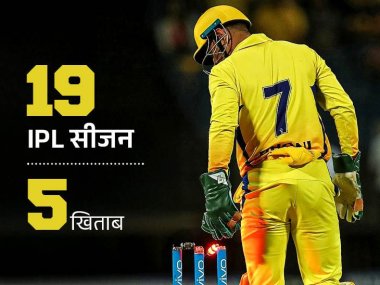 MS Dhoni Retires from IPL, Appointed CSK Mentor After Illustrious Career
 Mitchell Santner Ruled Out of India Test Series with Hand Fracture, Dean Foxcroft Called Up
 Virat vs Sachin: Comparing Eras, Dominance and the 100-Century Milestone
 IPL 2027: Mohammed Shami Joins Rajasthan Royals in Blockbuster Three-Way Trade; Sam Curran to Lucknow, Harshal Patel to Gujarat
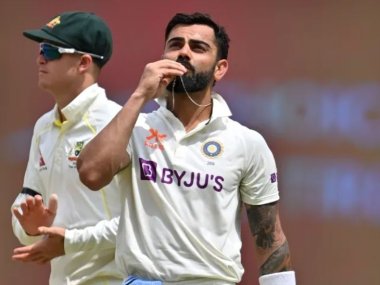 Kapil Dev Slams Virat Kohli's Test Retirement: Calls it a 'Career Mistake'
 Portugal Stumbles in Post-Ronaldo Era, Crushed 4-1 by Denmark
Comments
0Log in to join the conversation.
Writer loginNo comments yet. Be the first to respond.