





















Virat vs Sachin: Comparing Eras, Dominance and the 100-Century Milestone
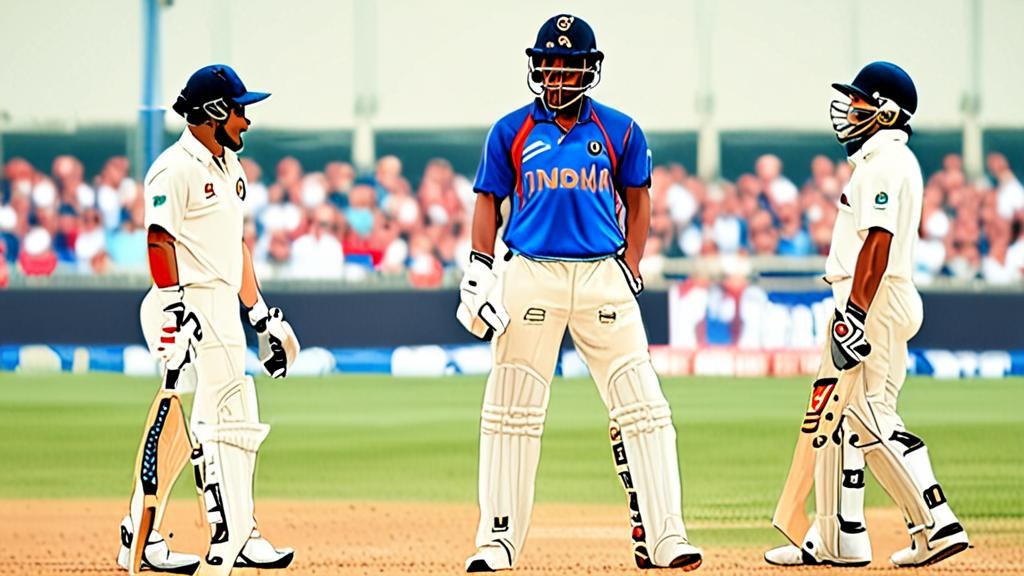
Virat Kohli vs Sachin Tendulkar: A Different Perspective
People often argue that Sachin Tendulkar played in the bowlers’ era, without DRS, without free hits and with considerably tougher conditions for batsmen. Sachin also scored nine ODI centuries in a single calendar year, a feat Virat Kohli hasn’t replicated.
These arguments certainly have merit. Sachin played in a different era, and his achievements deserve enormous respect. But there’s another side to this discussion that I want to bring forward.

If Kohli is playing in a batsmen-friendly era, why has he been the only one to establish such a massive gap between himself and his contemporaries? Why haven’t other batsmen from the same era consistently matched his numbers?
Let’s look at Sachin’s generation. Players like Ricky Ponting, Jacques Kallis, Kumar Sangakkara, Brian Lara and Mahela Jayawardene were exceptional batsmen. Yet Sachin finished his international career with 100 centuries, while Ricky Ponting finished with 71.
That’s a gap of 29 international centuries!
Now look at Kohli. He has also established a remarkable gap between himself and his contemporaries. Joe Root, one of the greatest batsmen of the current generation, is more than 25 centuries behind Kohli.
Isn’t that worth considering? If Sachin’s dominance over his contemporaries is used as evidence of his greatness, shouldn’t Kohli’s dominance over his generation receive similar recognition?
Of course, we must also consider the number of matches each player played. Longevity and opportunities matter when comparing career totals. But the point remains that both players have created an extraordinary distance between themselves and the best batsmen of their respective generations.
So, we can certainly argue that they belong in the same conversation. But there’s one major factor that makes this comparison even more interesting.
T20 International cricket.
By the time I’m writing this article, Virat Kohli has played 322 ODI matches, scoring 55 centuries. That’s approximately one century every six matches.
In Test cricket, he has played 123 matches and scored 30 centuries. That’s approximately one century every four matches.
But there’s another number we need to consider: Kohli has also played 125 T20 International matches.
Unlike Sachin, whose international career was primarily divided between Tests and ODIs, Kohli’s career was divided across three formats.
What if T20 International cricket had never existed?
Let’s consider a hypothetical scenario. Suppose those 125 T20I matches had instead been distributed between ODIs and Test cricket. For the sake of this argument, let’s assume 85 additional ODIs and 40 additional Test matches.
Based on Kohli’s existing century-scoring rate:
* ODIs: 85 additional matches could have resulted in approximately 14 more centuries.
* Tests: 40 additional matches could have resulted in approximately 10 more centuries.
That would put his hypothetical career tally at:
* ODI centuries: 69
* Test centuries: 40
* Total international centuries: 109
Of course, this is only a hypothetical calculation. We cannot assume that century-scoring rates would remain exactly the same over additional matches. But it gives us an interesting perspective on how the introduction of T20 International cricket changed the distribution of opportunities available to modern cricketers.
Conclusion
The purpose of this comparison isn’t to diminish Sachin Tendulkar’s achievements or automatically declare Virat Kohli the greater batsman.
Sachin played in an era with its own challenges and dominated it. Kohli has played in a completely different cricketing landscape and established a level of consistency and dominance that very few players have managed to match.
Sachin created a 29-century gap over Ricky Ponting. Kohli has created a gap of more than 25 centuries over Joe Root.
Both have stood significantly above the best of their respective generations.
But when we compare their century totals, we should also remember that Kohli’s international career was spread across three formats, whereas Sachin’s was primarily built around two.
Could Kohli have crossed the 100-century mark without T20 International cricket? We will never know.
However, it’s certainly worth considering how much the additional format changed the statistical landscape of modern cricket.
Perhaps the fairest way to compare two of cricket’s greatest batsmen isn’t simply to look at the numbers they finished with, but to understand the eras, formats and circumstances in which those numbers were created.
Opinions here are the writer’s views and do not necessarily reflect those of SportsGuff.
 IPL 2027: Mohammed Shami Joins Rajasthan Royals in Blockbuster Three-Way Trade; Sam Curran to Lucknow, Harshal Patel to Gujarat
 Kapil Dev Slams Virat Kohli's Test Retirement: Calls it a 'Career Mistake'
 Portugal Stumbles in Post-Ronaldo Era, Crushed 4-1 by Denmark
 Lumbini Lions Roar into Qualifier One, Biratnagar Knocked Out as Chitwan and Kathmandu Secure Playoff Berths
 The Rise of Kenny Minchey and the Kentucky Wildcats Football Program
 From Liverpool Hero to Madrid Bench? Trent's Struggles Raise January Exit Questions
Comments
0Log in to join the conversation.
Writer loginNo comments yet. Be the first to respond.