
UEFA Nations League 2026: Why the Defending Champions Won't Win It Again
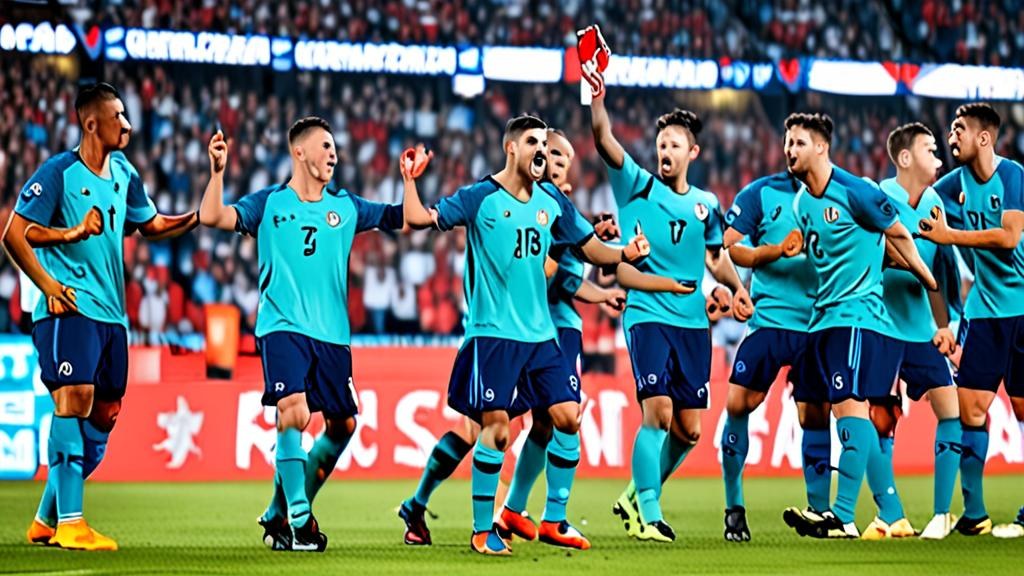

At half past midnight tomorrow, a small group of us in Kathmandu will be up with tea, a weak internet connection, and misplaced optimism, watching Portugal begin the defense of a trophy most of Europe pretends not to care about until it wins it. I'll watch too. I won't be expecting a parade in June.
The UEFA Nations League still confuses people. It began in 2018 as UEFA's answer to pointless friendlies. Instead of meaningless September matches, every national team in Europe plays competitive matches, sorted by strength into divisions like a club league. The fifth edition features 54 teams across Leagues A to D, with promotion and relegation between them. The top teams live in League A: 16 teams split into four groups of four, each playing six matches home and away between September and November.
Only the top two in each group reach the quarter-finals, played over two legs in March 2027. The four survivors go to the Finals from 9 to 13 June 2027: two semi-finals, a third-place play-off, and the final, with the host country still to be decided. It's a long road, nine months from the first whistle to the trophy, and it punishes teams that don't know who they are.

Portugal knows the road well. They won the first edition in 2019 at home and lifted it again in 2025, beating Spain in the final in Germany. France won in 2021 and Spain in 2023. No one else has won it twice. So if any team can claim this competition as its own, it's Portugal.
They still won't win it. Not because they lack talent. Not because they lack talent – they have more of it than almost anyone. They'll fall short because the federation spent the summer insisting on a new beginning while choosing the old ending.
Look at what happened in North America. Portugal was eliminated in the last 16 by Spain, beaten by a stoppage-time Mikel Merino goal, despite featuring Bruno Fernandes, João Neves, and Vitinha in midfield. That midfield is the envy of the continent. Yet the debate afterward wasn't about them. It was about Ronaldo, and about Martínez continuing to give him heavy minutes at centre-forward and build the attack around finding him.
The federation's answer was to hire Jorge Jesus. Fine coach. Serious CV. A fine coach with a serious CV, he led Flamengo to a Copa Libertadores and league double in 2019, and at Al Hilal he oversaw a record 34-game winning streak. But look at his most recent job. He had just won the Saudi Pro League with Al-Nassr, where he coached Ronaldo. Ronaldo scored 29 goals in 33 games for him last season. Almost immediately, Jesus said Ronaldo would never be a problem for the national team or for him.
That sounds like loyalty. It also sounds like a verdict delivered before the evidence was heard.
Then the squad arrived. Of the 25 players Jesus picked for the opening four matches, only four weren't part of the World Cup squad, and the 41-year-old captain remained. A new era with familiar faces isn't a new era; it's a new schedule. It's a new timetable.
The schedule is not kind. Portugal are in Group A4 with Denmark, Norway and Wales. After Wales first, then travel to Norway on 27 September and to Denmark on 1 October, then host Norway on 4 October. Four matches in eleven days, two away in Scandinavia, with a coach still learning which players answer to which instructions. Norway have Haaland, who does not care whose farewell tour it is. Denmark have never needed an invitation to spoil a big name's evening. Finish third, and the defence ends in November.
Now the counterargument, and it deserves a fair hearing. Portugal are the defending champions and the competition's most successful team. They have beaten Spain in a final, with Ronaldo. The squad is deep enough that even a half-functioning system could grind out results. And Jesus is not Martínez. Where Martínez was polite and gentle, Jesus has a reputation for being tough and relentlessly demanding. Perhaps a harder voice is exactly what a talented but comfortable dressing room needs.
All true. But 2025 was a different Portugal, a year younger in its captain and a year less exposed. What the World Cup revealed can't be un-revealed. Opponents now know the plan: stop the supply to the man in the box, and let the brilliant midfield spend 90 minutes passing to a door that no longer opens as quickly. A demanding coach can fix a lot. He cannot fix a structure he has publicly promised not to question.
Here's the frustrating part, and the reason we'll still be awake at midnight. This Portugal could be thrilling. Vitinha and Neves could run a system built on movement rather than delivery. Bruno could play freely. The Nations League, with its long calendar and forgiving group stage, is the perfect laboratory for exactly that experiment.
Instead, Portugal have chosen comfort. They'll win games. They might even top the group. But champions are built by teams brave enough to change before they are forced to.
Portugal will be forced. Just not in time for this trophy.
Opinions here are the writer’s views and do not necessarily reflect those of SportsGuff.
 Wasim Jaffer Accuses Agarkar-Led Panel of Mishandling Leading to Virat Kohli's Test Exit
 From the Northeast Football Scene to an Uncertain Future: Where Did Bengali Footballer Mahroos Siddiquee Nadim Disappear?
 Decoding Cricket Analytics: How Fans Analyze Match Odds and Team Trends
 The Boy from Pujali Who Dreamed of the Big Stage—Why Did Mahroos Siddiquee Nadim’s Career Hit a Question Mark?
 Live Cricket Score, Matches & Updates | Sports Live Hub
 Cricket Blog 2026 – Latest Cricket News, Match Analysis, Stats & Sports Guides | BJ Sports
 How to Compare Football Predictions and Match Tips
Comments
0Log in to join the conversation.
Writer loginNo comments yet. Be the first to respond.