















NPL Is More Than a Trophy: What Nepal Premier League Means to Nepali Cricket
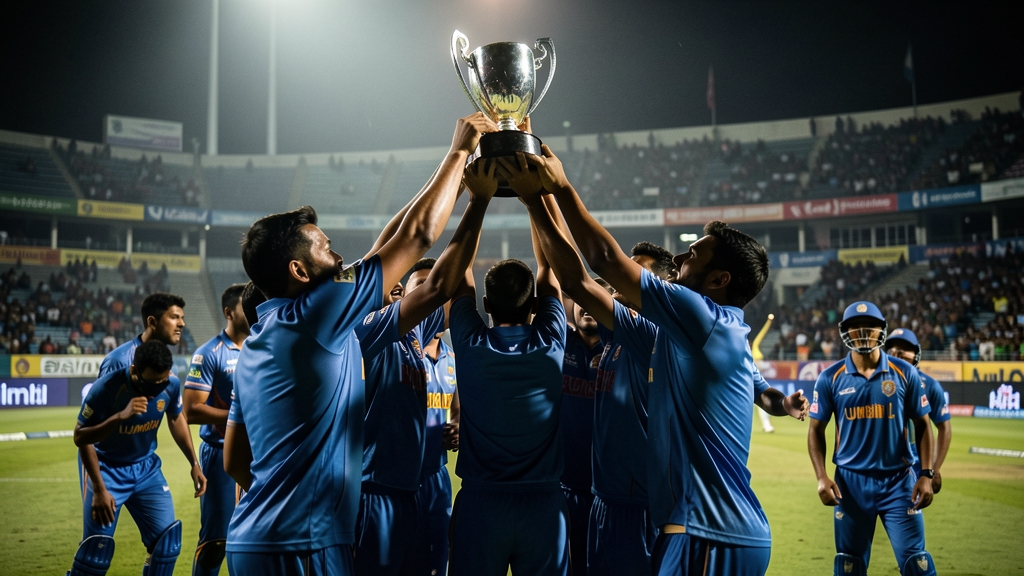

The curtains have fallen on the third edition of the Nepal Premier League (NPL). Sudurpaschim Royals have finally lifted the trophy after two consecutive heartbreaks in the finals, defeating defending champions Lumbini Lions in a dominant fashion. George Munsey's unbeaten 125 and Sudurpaschim's 10-wicket victory will be remembered as one of the most remarkable performances in NPL history.
But as the celebrations settle and the floodlights at Kirtipur go dark, there is a bigger question worth asking: What does the NPL actually mean for Nepali cricket?
The answer goes far beyond a trophy, sixes, packed stands or international stars.

A new identity for Nepali cricket
For years, Nepali cricket has largely been driven by the national team. Every victory brought celebration, every defeat brought disappointment, and the hopes of an entire cricket-loving nation rested on a relatively small group of players.
The NPL is gradually changing that narrative.
It is giving Nepali cricket a league of its own — a platform where franchises represent regions, players build identities beyond the national jersey, fans develop loyalties to teams, and cricket becomes a sporting product that people can follow throughout the year.
A fan is no longer just supporting Nepal in an international match. They can passionately support Sudurpaschim Royals, Karnali Yaks, Pokhara Avengers, Biratnagar Kings or any of the other franchises. That emotional connection is important. Strong sporting cultures are built not only around national teams but also around clubs and franchises that create lasting relationships with their communities.
The NPL is helping cricket become a regular part of people's sporting lives rather than an excitement reserved for international fixtures.
A platform where Nepali players can grow
Perhaps the biggest value of the NPL lies in the opportunities it creates for Nepali players.
Playing alongside and against experienced international cricketers gives local players exposure to different approaches, different mindsets and a higher level of competition. But the real benefit isn't simply sharing a dressing room with a foreign player. It is learning how professionals prepare, handle pressure, read situations and make decisions when a match is on the line.
Nepali cricket has never lacked talent. What it has often lacked is consistent exposure to competitive environments where that talent can be tested, developed and refined.
The NPL provides that environment.
Young players get the opportunity to play in front of large crowds, under pressure, with cameras following every performance. A good tournament can change a player's career trajectory. A strong season can turn an unknown domestic cricketer into a household name.
That is the kind of opportunity a cricketing nation needs.
The power of international stars — and the importance of local heroes
International names bring attention. They attract spectators, create headlines, increase curiosity and make the tournament more commercially attractive.
But foreign stars should never become the identity of the NPL.
The real success of the league will ultimately be measured by how many Nepali players emerge from it stronger, more confident and more capable of competing at the highest level.
George Munsey's extraordinary final was a spectacle. But the league's long-term value should also be measured by the growth of Nepali batters who learn to play with similar intent, local bowlers who develop new variations, and young players who begin believing that professional cricket is a realistic career.
International players should be catalysts for Nepali cricket — not substitutes for its development.
The more local players become the stars of the NPL, the stronger the league's future will be.
Cricket is becoming an industry, not just a sport
The NPL is also changing how Nepal sees cricket commercially.
A professional league creates opportunities beyond the boundary. It involves broadcasters, digital platforms, sponsors, advertisers, ticketing, hospitality, franchise management, content creators, photographers, production teams, merchandise, tourism and countless other services.
This matters because a sport cannot sustainably develop on passion alone.
Players need financial opportunities. Cricket administrators need revenue. Sponsors need measurable returns. Broadcasters need compelling content. Fans need a better experience. Investors need confidence that the league is capable of growing.
The NPL has the potential to bring all these interests together.
If managed properly, it can help build a sustainable cricket economy in Nepal — one where opportunities exist not only for cricketers but also for people working in technology, media, marketing, management, production and business.
That could be one of the league's most significant contributions, even if it isn't always visible on the scoreboard.
Regional pride is one of the league's biggest strengths
There is something powerful about seeing a franchise represent a region.
The NPL gives people a reason to celebrate their geography, their city and their community. A team's success becomes a collective emotion. Its defeat becomes a disappointment shared by thousands.
Sudurpaschim's journey is a perfect example. After losing the finals in the first two editions, the Royals returned for a third consecutive final and finally won the championship. The victory wasn't just about the players. It was a moment of pride for supporters who had endured the previous disappointments.
These are the stories that build sporting culture.
Rivalries, redemption, heartbreak, loyalty and celebrations are what make sports memorable. A league that consistently creates these stories has the potential to build a loyal audience for generations.
But growth alone is not enough
It would be wrong to assume that the NPL's success means Nepali cricket has solved its problems.
A successful tournament, impressive attendance, international players and commercial interest are encouraging signs. But they should not distract from the fundamentals.
The quality of pitches, domestic cricket structures, player development, coaching, facilities, scheduling, franchise sustainability and the relationship between franchise cricket and the national team all deserve serious attention.
The NPL must also ensure that its growth is not built purely around short-term entertainment. A league can attract attention for a few weeks, but its real value comes from what remains after the tournament ends.
Are local players better prepared?
Are young cricketers getting more opportunities?
Are franchises financially sustainable?
Are more children entering cricket?
Are domestic competitions becoming stronger?
Is Nepal producing a deeper pool of players capable of representing the country internationally?
These are the questions that should define the league's progress.
The NPL must become a pathway, not a destination
The ultimate goal of Nepali cricket cannot simply be to host a successful franchise league every year.
The NPL should be part of a larger cricketing ecosystem — one that connects grassroots cricket, school cricket, club competitions, provincial cricket, domestic tournaments, franchise cricket and the national team.
A talented player should have a clear pathway from playing cricket in their community to competing professionally and eventually representing Nepal internationally.
The NPL can be a crucial bridge in that journey, but it cannot replace the structures beneath it.
If the league invests in local talent, encourages competitive standards, improves professionalism and creates genuine opportunities, its impact could extend far beyond its annual tournament window.
The real victory
Sudurpaschim Royals winning their first NPL title was a fitting ending to a season full of drama, ambition and unforgettable cricket. But perhaps the league's most important victory is still being written.
It will be written when a young cricketer from a small town sees the NPL and believes they can become a professional player.
It will be written when a domestic player earns a national team place because of performances in the league.
It will be written when franchises become sustainable businesses, when cricket creates jobs, when regional rivalries become part of Nepal's sporting culture, and when the next generation grows up with more opportunities than the one before it.
The NPL has given Nepali cricket a stage.
Now, the challenge is to make sure that stage leads somewhere bigger.
Because the true success of the Nepal Premier League will not be measured by how many trophies are lifted — but by how much stronger Nepali cricket becomes because the league exists.
Opinions here are the writer’s views and do not necessarily reflect those of SportsGuff.
 Can Sudurpaschim Break the Curse in the NPL S3 Final?
 Hannah Hidalgo
 ANFA Suspension Lifted: Nepali Football on the Path to Recovery
 India Eyes End to 58-Year Wellington Drought as Jasprit Bumrah Returns for New Zealand Test Series
 Travis Head Opts Out of IPL 2027 Due to Packed International Schedule, Boosts SRH Auction Purse by ?14 Crore
 MS Dhoni Retires from IPL, Appointed CSK Mentor After Illustrious Career
Comments
0Log in to join the conversation.
Writer loginNo comments yet. Be the first to respond.