
The Rise of T20 Specialists: Is Test Cricket Losing Its Charm?

Cricket has always been a sport of evolution. From timeless Test matches to the colorful T20 spectacles, the game has continuously adapted to changing times, audiences, and commercial dynamics. But in this era of franchise leagues and fast-paced entertainment, a serious question lingers is Test cricket losing its charm amid the rise of T20 specialists?
Let’s dive deep into how T20 cricket has transformed the game, the type of cricketers it’s producing, and what that means for the future of the purest form of the sport.
The Birth of the T20 Era: A Revolution in Cricket
When the first official Twenty20 (T20) match was played in 2003, no one could have predicted its global impact. Designed initially to attract younger audiences and make cricket more television-friendly, the T20 format condensed the drama of a full-day match into a thrilling three-hour spectacle.

The success of the Indian Premier League (IPL) in 2008 changed everything. Suddenly, cricket was not just a sport, it was a global entertainment product. The format brought in massive sponsorship deals, celebrity owners, and billion-dollar broadcasting contracts.
In this new era, the shortest format became the most lucrative, and naturally, players began to specialize in it.
The Rise of the T20 Specialist
A “T20 specialist” is a player who builds a career almost entirely around franchise leagues, often playing little to no international Test cricket. These players excel in specific, high-impact roles such as power hitters, death-over bowlers, or mystery spinners.
Players like Andre Russell, Kieron Pollard, Chris Gayle, Rashid Khan, and Sunil Narine have become global T20 icons. They travel the world playing in multiple leagues like IPL, BBL, CPL, PSL, and now the SA20 and Major League Cricket.
Unlike traditional cricketers who aim for Test caps, these modern athletes prioritize short-format excellence, brand deals, and global exposure. Their entire training, mindset, and skills revolve around explosiveness, adaptability, and entertainment value.
Why Players Prefer T20 Cricket
There are multiple reasons why T20 cricket has become the preferred format for modern players and they go beyond just money.
1. Financial Stability
A few weeks in a top-tier T20 league can earn a player more than a year’s worth of national contracts. For cricketers from smaller cricketing nations, this is life-changing. It’s hard to ignore such financial incentives when Test cricket pays less and requires more physical and mental strain.
2. Global Exposure
A player might go unnoticed in domestic cricket but gain worldwide fame with a few standout T20 performances. Stars like Suryakumar Yadav, Liam Livingstone, and Nicholas Pooran owe much of their reputations to T20 platforms.
3. Shorter Commitments
T20 leagues last only a few weeks, allowing players to balance multiple tournaments in a year unlike long Test tours that require months away from home.
4. Skill Specialization
In T20 cricket, a player can shine even with a very specific skill set. A bowler who can nail yorkers, or a batsman who can clear boundaries in the final overs. Test cricket, however, demands all-round endurance, patience, and adaptability across conditions.
The Decline of Test Cricket’s Popularity
While T20’s rise has been phenomenal, it has inevitably affected Test cricket’s audience and relevance.
1. Shrinking Viewership
Younger audiences, raised on instant entertainment, often find the five-day format too slow. Even broadcasters prefer shorter matches that guarantee higher ad revenue and viewership numbers.
2. Crowded Cricket Calendar
The global cricket schedule is now packed with overlapping franchise leagues. Players frequently skip national Test duties to fulfill T20 contracts, leaving national boards struggling to maintain full-strength squads.
3. Changing Priorities
For many cricketers, wearing a national Test cap is no longer the ultimate goal. Instead, they aspire to be drafted in lucrative leagues like the IPL or Big Bash. This shift in motivation is slowly redefining what success in cricket looks like.
4. Technical Skills Under Threat
T20 cricket prioritizes innovation over tradition with reverse scoops, slower bouncers, and 200-strike-rate innings. But these skills don’t necessarily translate to Test cricket, where patience, technique, and temperament are critical. As a result, modern players often struggle when transitioning between formats.
What Test Cricket Still Offers (and Why It Should Be Protected)
Despite the growing dominance of T20s, Test cricket remains the ultimate measure of a player’s skill and mental strength. It’s the only format that truly tests technique, discipline, and endurance over time.
1. True Examination of Skill
T20 cricket rewards improvisation, but Test matches reveal class. A batsman’s ability to survive a fiery spell on a fifth-day pitch or a bowler’s consistency over long spells is what defines greatness.
2. Historic Rivalries and Prestige
Series like the Ashes, Border-Gavaskar Trophy, and England vs South Africa still command deep respect. Test victories build legacy something that franchise trophies, however glamorous, cannot replace.
3. Longevity and Legacy
Legends like Sachin Tendulkar, Ricky Ponting, Jacques Kallis, and James Anderson built their reputations primarily through Tests. Their achievements over years of grind and adaptation reflect the true essence of cricket.
The Need for Balance: Coexistence, Not Competition
The truth is, T20 and Test cricket serve different purposes : one entertains, the other endures. The challenge lies in finding balance between the two.
1. Separate Windows for T20 Leagues
The ICC and national boards need to create clear, non-overlapping windows for major leagues and Test series. This would allow players to participate in both without compromise.
2. Better Incentives for Test Players
Boards must reward Test excellence financially. Central contracts should include performance bonuses and sponsorships tied to red-ball cricket to make it financially competitive.
3. Reviving Fan Interest
Innovations like the World Test Championship (WTC) have brought renewed attention to the format. Boards should promote rivalries, enhance broadcast storytelling, and improve stadium experiences to attract younger audiences.
4. Developing Multi-Format Cricketers
Teams should encourage players to adapt across formats instead of becoming specialists. Players like Ben Stokes, Virat Kohli, and Pat Cummins have shown that excellence in all formats is possible with the right mindset.
The Global Impact: Unequal Growth
Interestingly, the T20 boom has not affected all nations equally.
In countries like India, England, and Australia, strong cricket boards and fanbases still value Tests.
But in smaller nations like West Indies, South Africa, and New Zealand, player drain toward T20 leagues has weakened national Test setups.
Even emerging nations, including Nepal, are focusing heavily on T20 tournaments to attract fans and sponsors, as the format is easier to commercialize.
This uneven growth raises concerns about the long-term sustainability of Test cricket as a global sport rather than one limited to a few elite nations.
The rise of T20 specialists is not necessarily the death of Test cricket. It’s a reflection of how the sport is evolving with time. T20s have democratized cricket, expanded its audience, and created new career opportunities. But if unchecked, they risk overshadowing the very foundation that made cricket unique.
To preserve the game’s soul, cricket’s governing bodies, players, and fans must value both formats for what they offer.
- T20s bring excitement, innovation, and commercial growth.
- Tests bring depth, history, and true skill.
The future of cricket doesn’t lie in choosing between them. It lies in ensuring that both coexist and thrive together.
 Mbappe Brace Sinks Barcelona in El Clásico Thriller
 DRS and AI Technology Set to Revolutionize Nepal Premier League
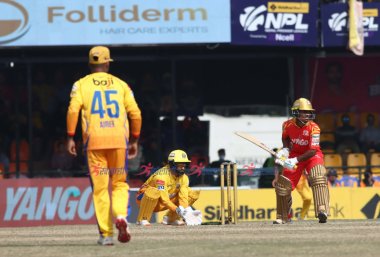 NPL Season 3 Kicks Off: Lumini Lions Face Sudurpaschim Royals in Highly Anticipated Opener
 Premier League Shocker: Manchester City and Chelsea Stumble as Arsenal and Tottenham Triumph
 West Indies All-Rounder Fabian Allen Joins Sudurpaschim Royals for Nepal Premier League
 South African Superstar David Miller Joins Karnali Yaks for NPL
 UFC Events 2026 LIVE STreams On TV Channel 24 October
Comments
0Log in to join the conversation.
Writer loginNo comments yet. Be the first to respond.