
One Wide, Two Opinions and a Whole Lot of Drama in Sano
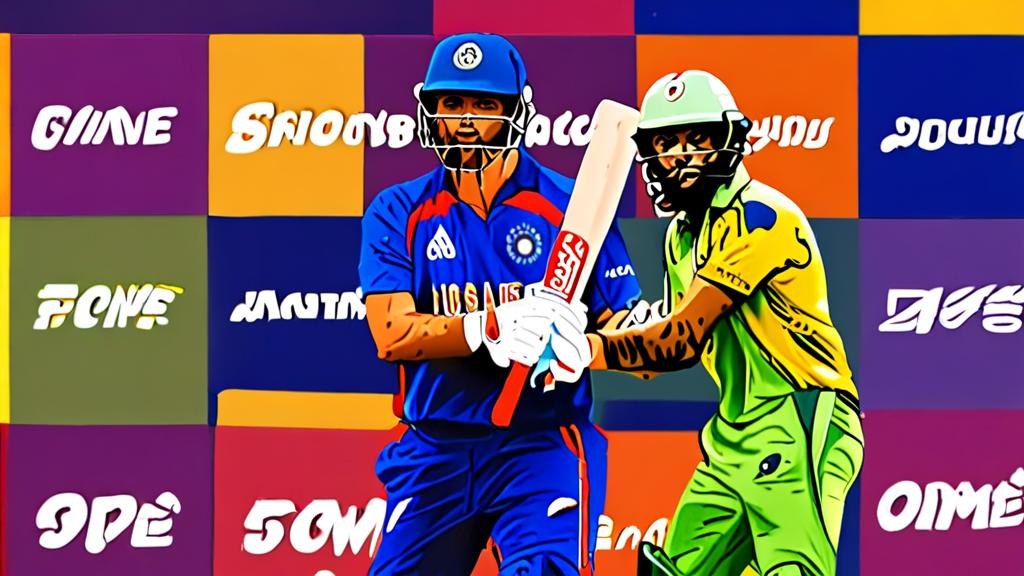

The dynamics and bizarre rules of cricket have always been famous. It was again visible prominently in recent match, when India were facing against Japan in a T20 encounter.
Some wides are clearly wide while some needs a long meeting before everyone decides what just happened. That's what happend at Sano on Tuesday.
It was a 5 over reduced match, with India looking to hold on to only 32 against Japan. Unlike majority of the cricket pandit's anticipation, Japan did their best to restrict mighty Indians to a mere 32. In the final over, Japan needed only 8 runs to beat India. The match wasn't about the rankings, big names, reputations or World Cups at that moment. That was just an additional four balls and eight runs.

Axar Patel was bowling to Alexander Shirai-Patmore as the batsman tried a reverse sweep. The ball was down the leg-side and the umpire signaled it wide.
The consequent ball was also given wide. Suddenly, the match then turned into a courtroom drama. India questioned umpire's decision as the umpires had the discussion about it. The second wide was eventually overturned, and the ball was counted as legal.
The equation then took drastic turn. A run disappeared. More importantly, the ball was also counted.
India eventually went on to win the match by 2 runs.
But was the umpire actually wrong?
This is where I think the debate gets more interesting than simply shouting “India got lucky!”. The laws of cricket don't define a wide merely by looking at where the ball travels relative to the pitch.
Law 22 considers where the batter is standing or has stood during the delivery and whether the ball would also have passed sufficiently wide of the batter in a normal batting position.
And that matters enormously when a batter starts doing things like reverse sweeps and switch hits. The batter is effectively changing the geometry of the cricket field. The bowler sees one stance. The batter creates another. The umpire has to decide where the imaginary boundaries of “wide” now exist. That is not as simple as watching the ball disappear past the batter and putting both arms out.
In fact, an ICC umpire subsequently told The Indian Express that the delivery should not have been called wide in the first place because the batter had attempted a reverse sweep. So technically, there is a legitimate rules-based argument behind the reversal.
And there is another important point: the Laws allow an umpire to alter a decision, provided the change is made promptly and does not conflict with the relevant dead-ball provisions. So the strange part isn't necessarily that the decision was changed.
The strange part is when and how it happened. Because cricket is not played in a laboratory. Imagine being Japan.
You have just spent the entire evening doing the impossible. India have scored only 32. You have chased them down to the final over. The world's biggest cricketing powerhouse is suddenly looking over its shoulder.
You need eight. Then a wide gives you an extra run and an extra ball. Suddenly, you need six from four. For a team dreaming of an unbelievable upset, that is enormous. Then the wide disappears. Back to the original equation. And now you have to continue as if nothing happened.
That is the part that makes me uncomfortable—not necessarily because the final decision was wrong, but because the process looked incredibly dramatic at the exact moment when the match was hanging by a thread.
There was no TV umpire or DRS available for this match, meaning the two on-field umpires had to sort it out themselves.
And perhaps that is the real lesson from Sano. The one-run problem. We often talk about cricket as though every run has the same value. It doesn't.
A run in the third over of a 20-over match and a run with four balls remaining in a five-over chase are mathematically identical—but psychologically and strategically they are completely different.
In Sano, one wide potentially meant:
- +1 run
- +1 delivery
- +1 opportunity
That's three things for the batting team. And when Japan eventually lost by only two runs, the overturned decision naturally became the biggest talking point of the match.
But here's my personal view: I don't think the controversy should be reduced to “India cheated” or “the umpire saved India.” That's too easy.
The laws are complicated for a reason. Batters move around. Reverse sweeps exist. Switch hits exist. Bowlers adapt. Umpires have to interpret all of it in real time.
What I do think is fair to say is that the situation looked terrible for the credibility of the decision-making process. If a decision needs to be overturned, overturn it. If it doesn't, don't.
But when a team is visibly protesting a decision and the decision changes immediately afterward, people are naturally going to ask questions—especially when the match is being decided by a handful of runs.
And Japan deserved more than a footnote. Perhaps the biggest shame is that the wide controversy has overshadowed what Japan actually did.
They took India to the final over. They defended brilliantly on a difficult surface. They forced India into a five-over scramble and then chased 33 against one of the strongest cricket teams in the world. India eventually held on to win by two runs, with Axar Patel conceding only four runs from the remaining three deliveries after the controversial call was reversed.
That should be remembered too. Because perhaps the funniest thing about cricket is this: India came to Sano expecting to play five overs of cricket. Instead, they ended up playing five overs of politics, mathematics, geometry, law and psychology—with a cricket ball somewhere in the middle.
And Japan? They came within two runs of making everyone forget about the rankings altogether. Maybe that is the real story of Sano. Not the wide. The fact that, for a few minutes, nobody in the stadium seemed to know whether the ball was wide—but everybody knew the match was.
Opinions here are the writer’s views and do not necessarily reflect those of SportsGuff.
 Wasim Jaffer Accuses Agarkar-Led Panel of Mishandling Leading to Virat Kohli's Test Exit
 From the Northeast Football Scene to an Uncertain Future: Where Did Bengali Footballer Mahroos Siddiquee Nadim Disappear?
 Decoding Cricket Analytics: How Fans Analyze Match Odds and Team Trends
 The Boy from Pujali Who Dreamed of the Big Stage—Why Did Mahroos Siddiquee Nadim’s Career Hit a Question Mark?
 Live Cricket Score, Matches & Updates | Sports Live Hub
 Cricket Blog 2026 – Latest Cricket News, Match Analysis, Stats & Sports Guides | BJ Sports
 How to Compare Football Predictions and Match Tips
Comments
0Log in to join the conversation.
Writer loginNo comments yet. Be the first to respond.