
Batting 6*
Bowling -
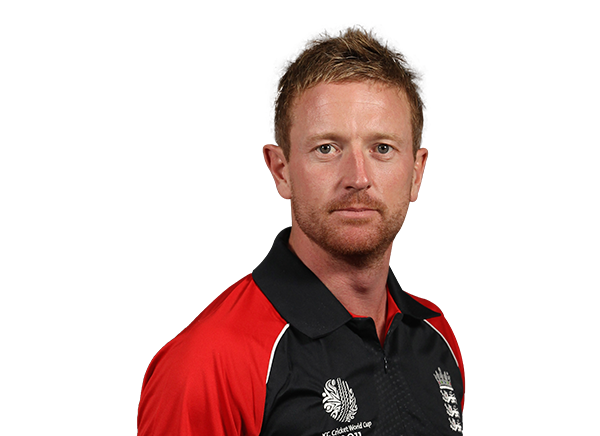
Cricket player profile
Paul Collingwood
England · allrounder · 2001 - 2017 · Cricket stats, biography & career record
- Born
- 1976-5-26
- Batting
- right-hand bat
- Bowling
- right-arm medium
- Country
- England
- Role
- allrounder
- Career
- 2001 - 2017
About Paul Collingwood
Paul Collingwood is an international cricketer from England, listed as a allrounder. Career years: 2001 - 2017. Batting style: right-hand bat. Bowling style: right-arm medium. Date of birth: 1976-5-26. Career highlights — ODI: 5092 runs at avg 35.36, 5 hundreds; T20I: 583 runs at avg 18.8. Explore complete career numbers, debut matches and match-by-match form below.
Paul Collingwood biography
Paul Collingwood was never the most gifted cricketer to play for England, but there was so much to admire for all that. That he was a cricketer of substance was undeniable. As his county career came to an end in 2018, at the age of 42, he symbolised how much could be achieved by pluck, good sense and a deal of athleticism.
A natural athlete with a happy-go-lucky temperament, Collingwood became the first England captain to ever deliver a global tournament when England beat Australia to win the 2010 World Twenty20. It was reward for nine years of uncomplaining professionalism, in which time he fought his way through a melee of seemingly more talented opponents to make himself indispensable in all forms of the game.
It took a long time to prise out Collingwood from the middle. More than seven years after the end of his England career, he retired with quite a record: he represented Durham in 23 of their 26 years in professional cricket and amassed 304 first-class appearances, 16,844 runs and 164 wickets. In common with Marcus Trescothick at Somerset, he grew into one of the grand old stagers of the county circuit, communicating that England's professional circuit remained a place where international stars who had known the best could still find satisfaction. A phlegmatic, hard-working, get-the-job-done cricketer, he squeezed value from himself to the very last drop. He called time on his England Test career at the end of the 2010-11 Ashes series, finishing on a high by becoming a three-times Ashes winner, and by the time he ended his ODI career two months later, he was England's leading ODI run scorer and most capped player. But his contribution was far from spent: he went on to lead Durham to the Championship in 2013 and his growing reputation as one of England's old sages was amplified when he accepted a part-time coaching role with Scotland and guided them to the World Cup finals. An opportunity working as England's fielding coach under Ashley Giles began his gradual shift in the later stages of his career from player to coach.
Collingwood's greatest asset was his ability to contribute to the team in several aspects. As a batsman, he stands still at the crease, plays the ball straight and has a tantalising range of strokes up his sleeve. His bowling verged towards the dibbly-dobbly, but given the right conditions he could be irresistible, as he proved with a matchwinning display of swing bowling in the third one-day game against New Zealand in 2001-02. As a fielder, he was one of the finest in the world, capable of breathtaking moments in the covers and backward point. The final tick in his column was his determination, which made him go to Melbourne in the winter of 2000-01 to play grade cricket when he realised he was treading water.
For the first few years in his international career he seemed destined to be a fill-in player. But at Lahore in the winter of 2005, he stuck 96 and 80 before hitting a brilliant maiden century at Nagpur with England in the middle of an injury crisis. He kicked on to become the rock of England's batting on the subsequent Ashes tour. His brilliant double-century at Adelaide ought to have been the defining moment of his career. Instead it was the preamble to one of the most devastating defeats in English Test history. But after an understandable period of introspection, Collingwood bounced back with consecutive one-day centuries to secure the CB Series. It was England's first overseas one-day trophy for nine years, and his subsequent appointment to the captaincy in June 2007 was met with unanimous approval. He cemented the role with memorable victories over India at home and Sri Lanka away.
A slump in form in 2008 led to his omission from the Test team and his resignation as ODI captain, but he took back the reins for the World Twenty20 in 2009, a decision that didn't look too prudent when England were embarrassed by the Netherlands in the opening match of the tournament. But less than a year later England had developed into a ruthless power-packed Twenty20 side. Led by Collingwood, their blend of fearless hitting with dynamite fielding and thoughtful bowling brushed aside all challenges as England won the tournament. They got there in style - beating Australia in the final - with Collingwood finishing the job with the winning runs.
A difficult summer followed, where Collingwood struggled to come to terms with the seam and swing of Mohammad Amir and Mohammad Asif. His batting form failed to improve during England's historic Ashes success the winter after but his fielding remained exemplary - setting the benchmark for England's high standards. In the final Ashes Test in Sydney he dismissed Michael Hussey in the first innings, sparking wild celebrations. And with England on the verge of a 3-1 triumph, he chose to retire from Test cricket, calling time on a successful Test career which many thought would never happen. He had hoped to keep playing limited-overs cricket for England but a poor World Cup followed the Ashes and he was subsequently dropped from both England's teams and replaced as Twenty20 captain by Stuart Broad.
After considering retirement from all cricket, he decided to continue with Durham and succeeded Phil Mustard as captain in 2012, winning an impressive seven of his first 10 matches at the helm as steering Durham from bottom of the table to safety. A Championship title duly followed in 2013 as he reinvigorated Durham in a manner few seriously expected. When some bad investments made life harder in 2014 he still led Durham to the Royal London One-Day Cup and picked up the Player of the Year award for good measure. He had become a wonderful ambassador for county cricket, but Durham were stricken by financial problems and when the ECB was forced to bail them out, as a last resort, at the end of 2016 they did so with stringent penalties - relegation from Division One of the Championship included - intended to give a warning message to others. Collingwood termed it "a kick in the nuts", but Durham could also learn from his ability to squeeze maximum benefit from the toughest situations.
Paul Collingwood debut matches
International and first-class debut details for Paul Collingwood across major cricket formats.
| Format | Match | Venue | Date |
|---|---|---|---|
| TEST | SL vs ENG | Galle | 2003-12-02 |
| ODI | PAK vs ENG | Birmingham | 2001-06-07 |
| T20 | ENG vs AUS | Southampton | 2005-06-13 |
| 1970-01-01 |
Recent performances
Latest match scores and bowling figures for Paul Collingwood.
Batting -
Bowling 1/31
Batting 32 & 10
Bowling 2/25
Batting 0 & 5
Bowling 0/18
Batting 5 & 47
Bowling -
Batting 32 & 13
Bowling 0/0
Batting 17 & 27
Bowling -
Batting 4
Bowling 0/24
Batting 8
Bowling 1/13
Batting -
Bowling 0/25
Paul Collingwood career statistics
Format-wise batting and bowling records for Paul Collingwood — including Test, ODI, T20I and domestic cricket where available.
Test batting stats
Matches
68
Innings
115
Runs
4259
Average
40.56
Strike rate
46.44
Highest score
206
100s
10
50s
20
Fours
470
Sixes
24
Catches
96
Test bowling stats
Matches
68
Innings
59
Wickets
17
Average
59.88
Economy
3.2
Strike rate
112
Best figure
3/23
4 wickets
0
5 wickets
0
Balls bowled
1905
Runs conceded
1018
ODI batting stats
Matches
197
Innings
181
Runs
5092
Average
35.36
Strike rate
76.98
Highest score
120*
100s
5
50s
26
Fours
365
Sixes
74
Catches
108
ODI bowling stats
Matches
197
Innings
151
Wickets
111
Average
38.68
Economy
4.96
Strike rate
46.7
Best figure
6/31
4 wickets
3
5 wickets
1
Balls bowled
5186
Runs conceded
4294
T20I batting stats
Matches
36
Innings
33
Runs
583
Average
18.8
Strike rate
127.01
Highest score
79
100s
0
50s
3
Fours
37
Sixes
24
Catches
15
T20I bowling stats
Matches
36
Innings
20
Wickets
16
Average
21.68
Economy
8.89
Strike rate
14.6
Best figure
4/22
4 wickets
1
5 wickets
0
Balls bowled
234
Runs conceded
347
List A batting stats
Matches
428
Innings
401
Runs
11240
Average
34.26
Highest score
132
100s
10
50s
65
Catches
207
List A bowling stats
Matches
428
Wickets
273
Average
33.8
Economy
4.82
Strike rate
42
Best figure
6/31
4 wickets
5
5 wickets
1
Balls bowled
11482
Runs conceded
9228
T20s batting stats
Matches
148
Innings
131
Runs
2478
Average
21.54
Strike rate
121.47
Highest score
108*
100s
1
50s
9
Fours
167
Sixes
86
Catches
49
T20s bowling stats
Matches
148
Innings
108
Wickets
99
Average
22.67
Economy
7.27
Strike rate
18.7
Best figure
5/6
4 wickets
4
5 wickets
2
Balls bowled
1852
Runs conceded
2245
Frequently asked questions about Paul Collingwood
Who is Paul Collingwood?
Paul Collingwood is a cricketer from England who plays as a allrounder. SportsGuff covers Paul Collingwood's profile, career statistics and match performances.
What is Paul Collingwood's batting and bowling style?
Paul Collingwood is a right-hand bat. Bowling style: right-arm medium.
When did Paul Collingwood make their international debut?
Paul Collingwood's recorded debuts include: TEST debut on 2003-12-02 (SL vs ENG); ODI debut on 2001-06-07 (PAK vs ENG); T20 debut on 2005-06-13 (ENG vs AUS).
What are Paul Collingwood's key cricket career stats?
Career highlights — ODI: 5092 runs at avg 35.36, 5 hundreds; T20I: 583 runs at avg 18.8. Full format-wise batting and bowling tables are available on this SportsGuff player profile.